Top Tips for Choosing the Best Oil Rubber Hose for Your Needs
Choosing the right oil rubber hose is crucial for various industries. According to industry expert Mark Thompson, "The right hose can prevent operational failures and enhance efficiency." In today's competitive market, understanding the specifications and applications of oil rubber hoses is essential.
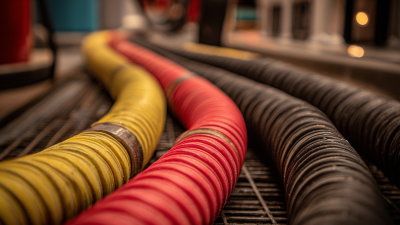
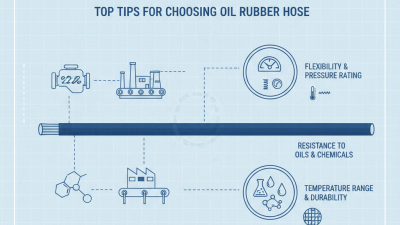
Oil rubber hoses come in different types, materials, and sizes. Each type caters to specific needs. It’s important to consider factors like temperature, pressure, and fluid type when selecting a hose. Many users often overlook these parameters. This can lead to costly mistakes.
Moreover, not all hoses are created equal. A misjudgment can compromise safety and performance. Even minor discrepancies in specifications can result in significant issues. Assessing your exact requirements and seeking expert advice are steps in the right direction. Remember, investing time in choosing the best oil rubber hose can pay off in efficiency and reliability.
Understanding the Different Types of Oil Rubber Hoses and Their Uses
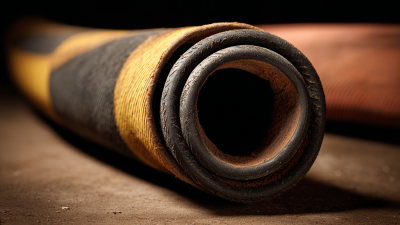
Choosing the right oil rubber hose requires understanding the different types available. Oil rubber hoses vary in material, size, and application. For instance, general-purpose hoses are ideal for transferring various oils in low-pressure systems. They can handle basic petroleum products, but their durability may not suit all environments.
Another type is the heavy-duty hose, specifically designed for high-pressure applications. These hoses are reinforced with layers to resist external damage. When selecting a heavy-duty option, consider the operating pressure. It is crucial to ensure compatibility with the specific oil type used.
At times, users overlook the importance of temperature resistance. If a hose cannot withstand extreme temperatures, it may lead to premature failure. Evaluate the environment where the hose will be used. This can prevent future inconveniences and ensure smooth operations. Selecting the wrong hose may lead to leaks or even hazardous situations. Balancing between durability and flexibility is key for optimal performance.
Top Tips for Choosing the Best Oil Rubber Hose for Your Needs
| Type of Hose |
Material |
Max Pressure (psi) |
Temperature Range (°F) |
Common Uses |
| Standard Oil Hose |
Nitrile Rubber |
150 |
-20 to 180 |
Hydraulic systems, fuel transfer |
| High Pressure Oil Hose |
Synthetic Rubber |
300 |
-40 to 212 |
Hydraulic machinery, heavy equipment |
| Oil Resistant Hose |
EPDM Rubber |
250 |
-30 to 220 |
Automotive applications, fuel lines |
| Chemical Resistant Hose |
Viton Rubber |
200 |
-40 to 300 |
Chemical handling, industrial uses |
| Reinforced Oil Hose |
PVC & Polyester |
150 |
-10 to 160 |
Low pressure oil transfer, light-duty applications |
Key Specifications to Consider When Selecting Oil Rubber Hoses
When selecting oil rubber hoses, several key specifications play a crucial role. Pay attention to the operating temperature range of the hose. This specification helps ensure that the hose performs well in both high and low temperatures. A poor choice may lead to hose failure.
Consider the hose diameter; it directly affects flow rates. A too-small diameter can restrict flow, while a larger one may lead to excess pressure loss. Ensure you choose a size that matches your equipment's requirements.
Durability is another vital aspect. Look for hoses that can withstand abrasion and chemical damage. Think about your working environment. Hoses exposed to harsh conditions need to be tougher.
Tips: Check for flexibility as well. A flexible hose is easier to handle, but ensure it can still maintain shape under pressure. Also, review customer feedback on various options. Sometimes, insights from real users reveal less obvious flaws or advantages.
Top Tips for Choosing the Best Oil Rubber Hose for Your Needs
Evaluating Pressure Ratings: Ensuring Safety and Efficiency in Oil Hoses
When choosing oil rubber hoses, evaluating pressure ratings is crucial for safety and efficiency. According to industry data, the typical pressure range for oil hoses is between 100 and 300 PSI. Selecting a hose rated for the right pressure ensures it can handle the demands of your application. Ignoring these ratings can lead to catastrophic failures.
One key tip is to assess the working pressure closely. Each hose should meet or exceed the maximum pressure of the system. For example, if your operation uses a 200 PSI system, opting for a hose rated at 250 PSI provides a safety margin. This precaution can avoid leaks and bursts, which can be dangerous.
It's also important to consider the factors that influence pressure rating. For instance, hose temperature impacts performance. This means a hose rated for 300 PSI may not perform the same under high temperatures. Choose hoses with temperature ratings that suit your environment to enhance durability. Regularly inspecting hoses for wear and tear is essential. Signs of cracks or deformation can suggest imminent failure, risking safety and efficiency.
Material Durability: Comparing Nitrile, Neoprene, and Other Options
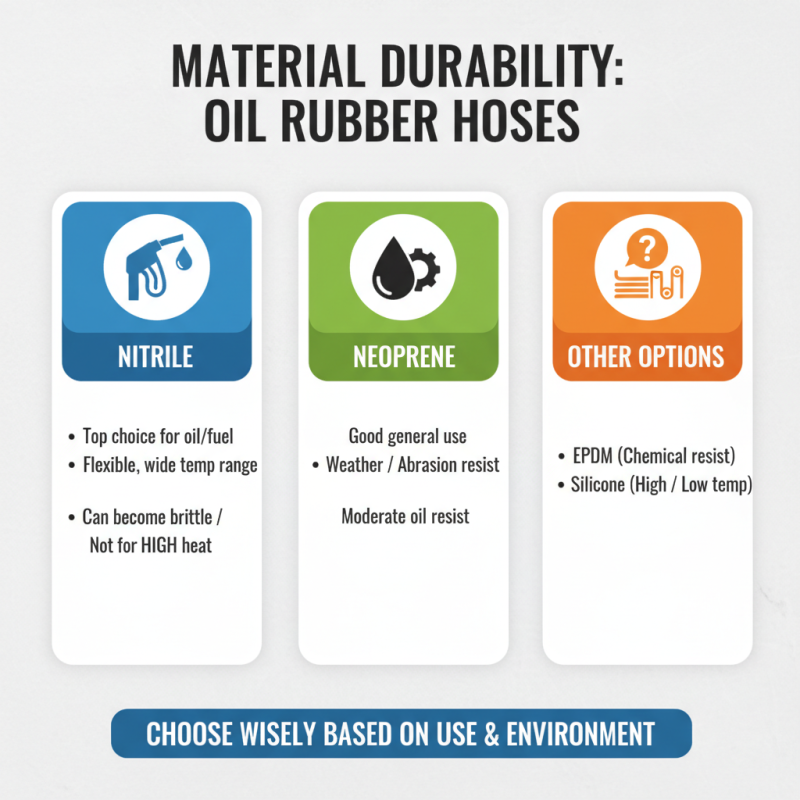
When selecting the ideal oil rubber hose, material durability is crucial. Nitrile rubber is often the top choice due to its excellent resistance to oil and fuel. It's flexible and can handle various temperatures. However, some users report issues with brittleness over time. It's essential to consider how the hose will be used. If you are in a high-temperature environment, nitrile may not be the best option.
Neoprene is another option worth considering. It provides good resistance to ozone and aging, making it suitable for outdoor use. Users appreciate its durability and flexibility. However, neoprene may not perform as well in extreme temperatures compared to nitrile. This fact can lead to potential failures if not properly matched to job requirements.
Other materials, like EPDM, offer unique benefits but may not be suitable for oil handling. Their resistance to weathering is notable, yet they may lack the oil compatibility seen in nitrile or neoprene. Evaluating the specific needs of your application is essential. Ignoring these differences can lead to costly mistakes. Take the time to research and analyze the environment where the hose will be employed.
Maintaining and Caring for Oil Rubber Hoses to Extend Longevity
Maintaining oil rubber hoses is essential for their longevity. Regular visual inspections can help identify wear and tear before it leads to failure. Look for cracks, abrasions, or any signs of damage. Even small issues can escalate. Keeping your hoses clean is vital. Oil and dirt buildup can compromise performance. A simple wash with soap and water will do. Dry them thoroughly to prevent mold.
Storage plays a key role in care. Store hoses in a cool, dry place, away from direct sunlight. Prolonged exposure can weaken the material over time. Avoid leaving hoses coiled too tightly. This can create kinks that may not resolve when uncoiled. Not all hoses handle every substance. Be aware of the oil types and temperatures they can withstand. Using them outside their specifications can lead to premature failure.
Periodic testing for leaks ensures functionality. This can save time and reduce costs in the long run. If a hose fails during use, reassess your maintenance practices. Learning from these experiences can enhance your operational reliability. Pay attention to your hoses. They deserve care, just like any other tool in your arsenal. Neglect can lead to unwanted issues that might have been easily avoided.