Top Benefits of Using Flexible Silicone Hose in Various Applications?
Flexible Silicone Hose has become a popular choice in various industries. This popularity is due to its unique properties. These hoses are known for their durability, heat resistance, and flexibility. They can handle extreme temperatures and pressures. This versatility makes them suitable for many applications.
In automotive, manufacturing, and food industries, Flexible Silicone Hose plays a vital role. It ensures safe and efficient transfer of fluids and gases. The non-toxic nature of silicone is a significant advantage. In the food sector, this property guarantees safety for food and beverages.
However, it's essential to consider installation challenges. Not all applications may benefit equally. Compatibility with other materials could be an issue. Therefore, careful evaluation is crucial before use. Embracing the benefits of Flexible Silicone Hose can lead to improved processes. Understanding its limitations is just as important. This balance can help users maximize its benefits.
Overview of Flexible Silicone Hose and Its Properties
Flexible silicone hoses have gained popularity due to their unique properties. They are highly adaptable and can be used in various environments. These hoses can handle extreme temperatures, both hot and cold. This makes them ideal for automotive, industrial, and household applications.
One of the key characteristics of silicone hoses is their flexibility. They can bend and twist without damaging the material. This flexibility allows for easy installation in tight spaces. Moreover, silicone is resistant to many chemicals. However, it may not withstand some harsh solvents. Users should be aware of these limitations.
These hoses also offer excellent durability. They resist aging and can last significantly longer than rubber hoses. However, they may be more prone to punctures if not handled carefully. Overall, flexible silicone hoses present a compelling option for various applications. Proper understanding and handling are essential for maximizing their benefits.
Common Applications of Flexible Silicone Hose in Various Industries
Flexible silicone hoses are gaining traction across numerous industries due to their versatility. In the automotive sector, these hoses can withstand varying temperatures. They are commonly used in cooling systems and air intake systems. The automotive industry accounts for nearly 25% of the global silicone hose market, indicating a strong demand.
In the food and beverage industry, flexible silicone hoses are crucial for safe and hygienic transport. They meet strict health standards. Data shows that 35% of silicone hose applications occur here. Their ability to handle temperature fluctuations without compromising quality is vital. However, some manufacturers struggle with the consistency of material quality.
In medical applications, these hoses are essential for ensuring clean fluid transfers. They help maintain the integrity of sensitive substances. According to industry reports, the medical sector comprises around 15% of the silicone hose market. Still, there are challenges, such as the need for regular testing to ensure compliance with evolving health regulations. Overall, while flexible silicone hoses offer numerous advantages, continuous improvement in quality control is necessary.
Top Benefits of Using Flexible Silicone Hose in Various Applications
| Application |
Benefit |
Industry |
Temperature Resistance (°C) |
Flexibility Rating |
| Automotive |
High heat resistance |
Transportation |
-40 to 200 |
Excellent |
| Medical |
Non-toxic material |
Healthcare |
-60 to 180 |
Very Good |
| Food Processing |
Food-grade compliance |
Food & Beverage |
-30 to 150 |
Good |
| Marine |
Corrosion resistance |
Marine & Offshore |
-40 to 120 |
Excellent |
| HVAC |
Energy efficiency |
Construction |
-20 to 100 |
Very Good |
Advantages of Using Flexible Silicone Hose Over Traditional Hoses
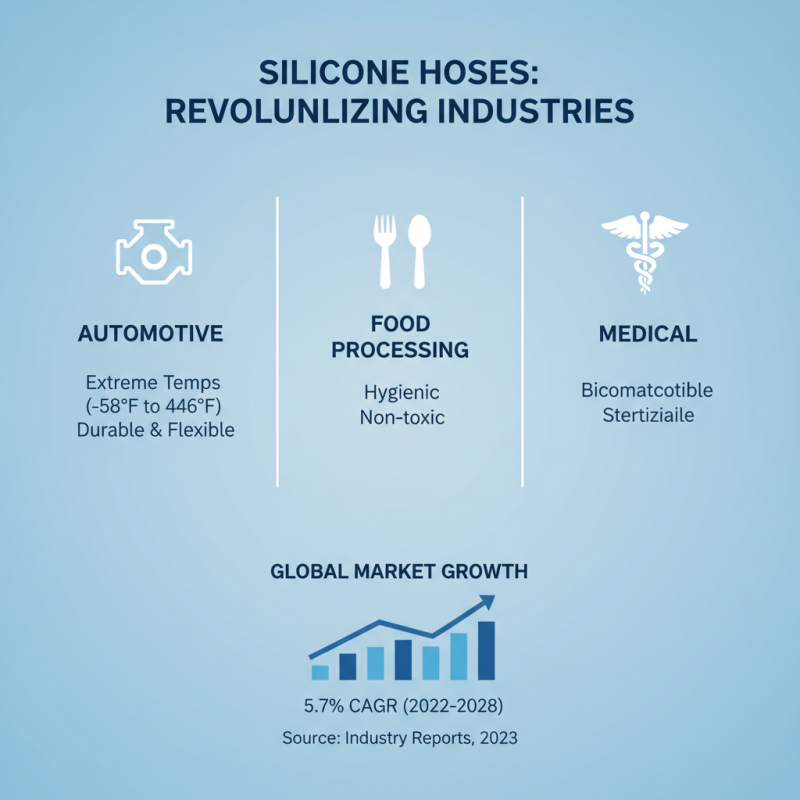
Flexible silicone hoses have reshaped various industries due to their unique properties. Unlike traditional rubber hoses, these silicone hoses can withstand extreme temperatures, ranging from -58°F to 446°F. This wide temperature range makes them ideal for applications in automotive, food processing, and medical sectors. According to industry reports, the global silicone hose market is expected to grow at a CAGR of 5.7% from 2022 to 2028.
One significant advantage of silicone hoses is their flexibility. They can bend and twist without compromising performance. This feature enhances installation ease, especially in tight spaces. A study by the Flexible Hose Association indicates that using flexible silicone hoses can reduce production downtimes by up to 25%. Additionally, these hoses are highly resistant to aging and environmental factors, offering durability over traditional materials.
While flexible silicone hoses excel in many areas, they are not without challenges. Their initial cost can be higher than rubber hoses. Maintenance can also be a concern, as silicone may need specialized cleaning. Users must consider these factors before making a switch. The trade-off between upfront cost and long-term reliability is essential for businesses to assess.
Performance Features of Flexible Silicone Hose in Extreme Conditions
Flexible silicone hoses are invaluable in extreme conditions. They withstand high temperatures, often reaching up to 260°C, making them ideal for automotive and industrial applications. Their exceptional flexibility allows them to bend without breaking. This adaptability is crucial in tight spaces where rigidity can lead to failure. Reports show that silicone hoses have lower failure rates compared to traditional rubber hoses, particularly in demanding environments.
Another important feature is their resistance to chemical degradation. Silicone hoses can endure exposure to a variety of fluids. This includes oils and solvents, which can degrade other materials. A study noted that silicone hoses maintain integrity longer than alternatives, reducing the need for frequent replacements.
Tips: Regular inspections can help identify wear before it leads to failure. Look for cracks or discoloration, as these may indicate deterioration. Additionally, ensure that the hose is properly secured to prevent stress that can cause leaks. Using the right hose size is also vital; too tight can lead to tears, while too loose can cause slippage. Pay attention to installation practices; they impact the longevity of the hose.
Maintenance Tips for Ensuring Longevity of Flexible Silicone Hose
Maintaining flexible silicone hoses is essential for their longevity and performance. Regular inspections can reveal early signs of wear or damage. Look for cracks, abrasions, or discoloration. These issues often indicate it is time for replacement. Sometimes, users overlook these signs, leading to potentially expensive equipment failures.
Cleaning the hoses properly is also vital. Use a mild soap and water solution. Avoid harsh chemicals that could degrade the silicone material. Rinse thoroughly to remove any residue. Neglecting this step can result in dirt buildup, which can affect performance. In some cases, people cut corners and use abrasive tools, causing more harm than good.
Proper storage of silicone hoses extends their life. Keep them in a cool, dry place away from direct sunlight. Bending or twisting them when storing can create weak spots. Instead, roll them up gently. It’s common for users to store hoses in a hurry, leading to damaged sections. A little attention now means better performance later.
Top Benefits of Using Flexible Silicone Hose
This chart illustrates the top benefits of using flexible silicone hose across various applications. Each benefit is rated on an index scale, showcasing exceptional temperature resistance, flexibility, durability, chemical resistance, and lightweight design. These features contribute to the longevity and efficiency of flexible silicone hose in diverse environments.